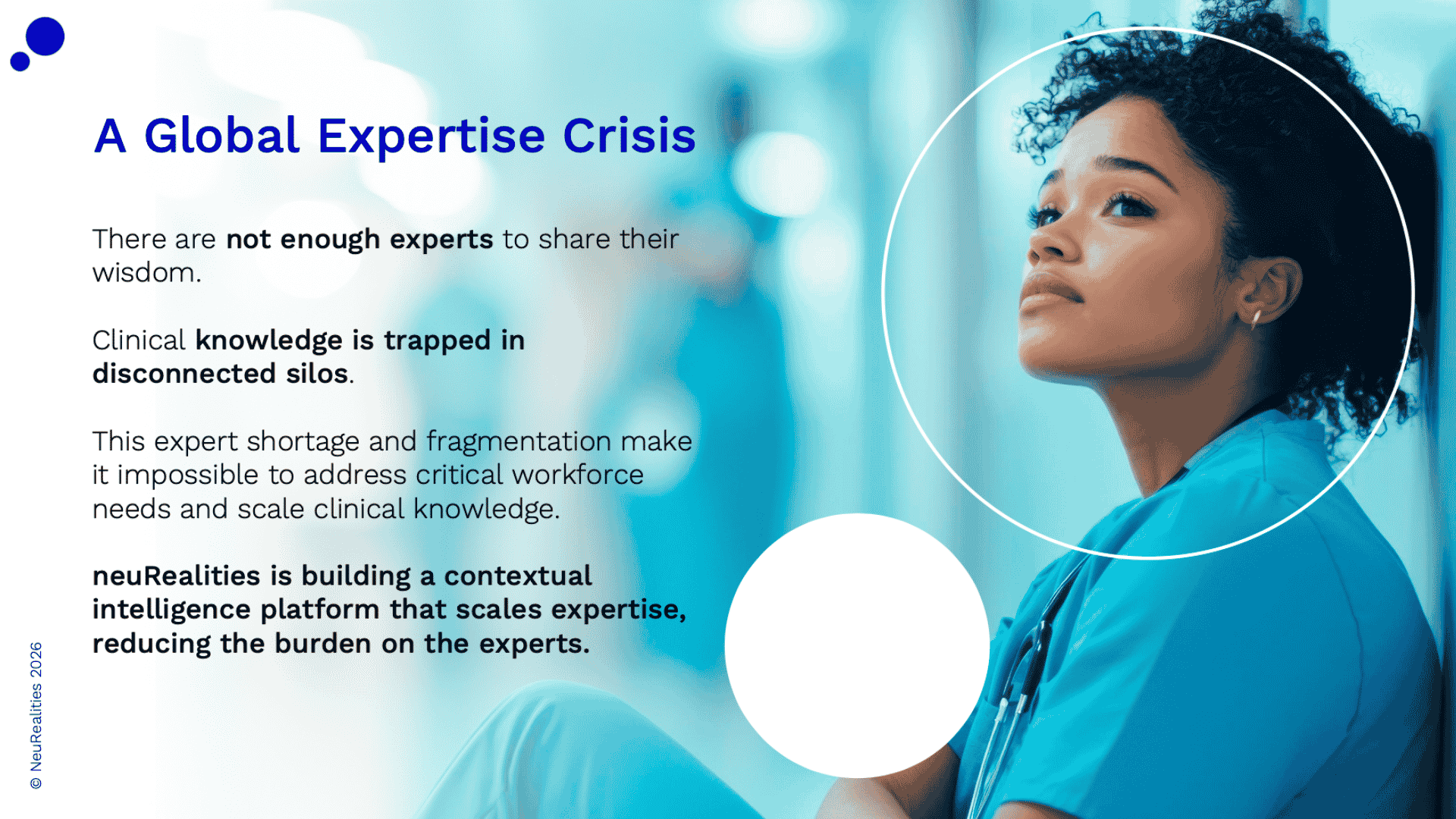
Image courtesy of neuRealities
Beyond the buzzwords
Why neuRealities chose people-centered storytelling in a world obsessed with AI innovation.
These days, it seems like every up-and-coming tech company is centered on AI. In a crowded industry where every healthcare and tech company seems to be competing for the title of “most advanced,” the human story can get lost behind brand-specific chatbots and crisp, futuristic interfaces.
For neuRealities, a healthcare technology company, this presented an opportunity. Rather than being a brand centered on what its technology could do, the company set out to be one centered on who it could help.
Leading that effort was Leslie Marshall, Head of Marketing and Brand at neuRealities. With more than 25 years of experience in marketing, media, and branding, Marshall joined neuRealities as one of its earliest team members. She immediately saw an opportunity to challenge the conventional AI narrative and create a brand that put people, not technology, at the center of the conversation.
The Rebrand:
“The first step was foundational: defining the problem we solve, clarifying the audience, aligning leadership around the narrative, and identifying what we wanted people to feel when they encountered the brand. That became the basis for everything that followed, from messaging and visuals to storytelling and internal adoption,” Marshall said.
One challenge many organizations face during a rebrand is securing leadership approval. For neuRealities, however, leadership already understood the value of innovation and design. They knew that in healthcare and AI, they needed to lead with more than just technical sophistication.
“One of the biggest adaptations was realizing we didn’t need to make the technology less sophisticated; we needed to make the human impact more visible. We had to balance credibility and empathy simultaneously," Marshall said. This insight influenced every aspect of the process.
Marshall and the team began with the core of the brand: identifying what problem it solved, clarifying its audience, and determining how they wanted people to feel when interacting with the brand. From there, they were able to develop a brand identity with strategic meaning behind everything from the logo and colors to messaging and storytelling.
For Marshall, several principles were non-negotiable.
First, every design choice needed purpose. The thought-bubble-inspired logo symbolizes ideas and imagination becoming reality. The lowercase styling of the name (neuRealities, not NeuRealities) is a nod to engineering and tech culture.

"We were not going to become another abstract AI company using only diagrams, interfaces, and technical jargon.”
- Leslie Marshall, Head of Marketing and Brand
“I strongly believe: if your team can’t use the brand, it doesn’t exist,” said Marshall. Marshall and the marketing team focused equally on external marketing resources as well as an internal, accessible brand system. They created templates, messaging frameworks, and other branded tools so employees can confidently carry the brand forward in all aspects of work.
Finally, the team thought it was essential to focus on real, human-centered storytelling.
“We were not going to become another abstract AI company using only diagrams, interfaces, and technical jargon,” Marshall said. The decision to place people at the center of the brand ultimately stemmed from the problem neuRealities was trying to solve.
The company exists to help scale expertise in healthcare, where critical knowledge is often confined to a limited number of experts. As Marshall and her team spoke with healthcare professionals, educators, and stakeholders, they discovered that the real challenge extended beyond technology. Burnout, workforce shortages, patient anxiety, limited mentorship opportunities, and access to trusted information consistently emerged as pressing concerns.
“When we shifted from ‘look at our technology’ to ‘look at the people this helps,’ the brand became significantly more compelling,” Marshall said. Already, the response has been incredibly encouraging.
Internally, neuRealities is seeing stronger alignment across teams and more consistency in communications. Externally, the company has seen increased engagement at industry events, stronger visibility across digital channels, and stronger audience resonance around their updated messaging. For Marshall, one of the clearest indicators of success goes beyond metrics. The story and purpose of neuRealities is truly sticking with people.
Her advice for companies considering a rebrand is simple. Start with the truth. Understand your brand: the problem you solve, who you serve, and how you want people to feel. Understand that brand is a part of business strategy -- “it's not decoration, it’s how people understand your value.” Put humans back into the story, especially in AI. Consumers still need the trust, empathy, and connection that people-centered storytelling can provide. Don’t lose sight of the human experience behind the technology. “The brands that will win,” Marshall said, “are the ones that remember that.”

Image courtesy of Cannes Lions
Countdown to Cannes
From IKEA to Heineken, many are vying for top awards.
We're heading to France for the Cannes Lions International Festival of Creativity, where marketers, communicators, and creatives from around the world gather to celebrate the ideas shaping our industry. Since 1954, Cannes Lions has been the global stage for creative excellence -- and our excitement is already building.
This week, Cannes released its first awards shortlists, including the coveted Dan Wieden Titanium Lions, one of the festival's most competitive honors. Making the shortlist alone is a major achievement for this prestigious award that recognizes breakthrough creative work. Take a look at the shortlist here.
From thought-provoking sessions to activations like Stagwell Sport Beach, we're looking forward to exploring emerging trends, meeting new people, and learning from some of the industry's most innovative thinkers. If you're attending, we'd love to connect and continue the conversation.
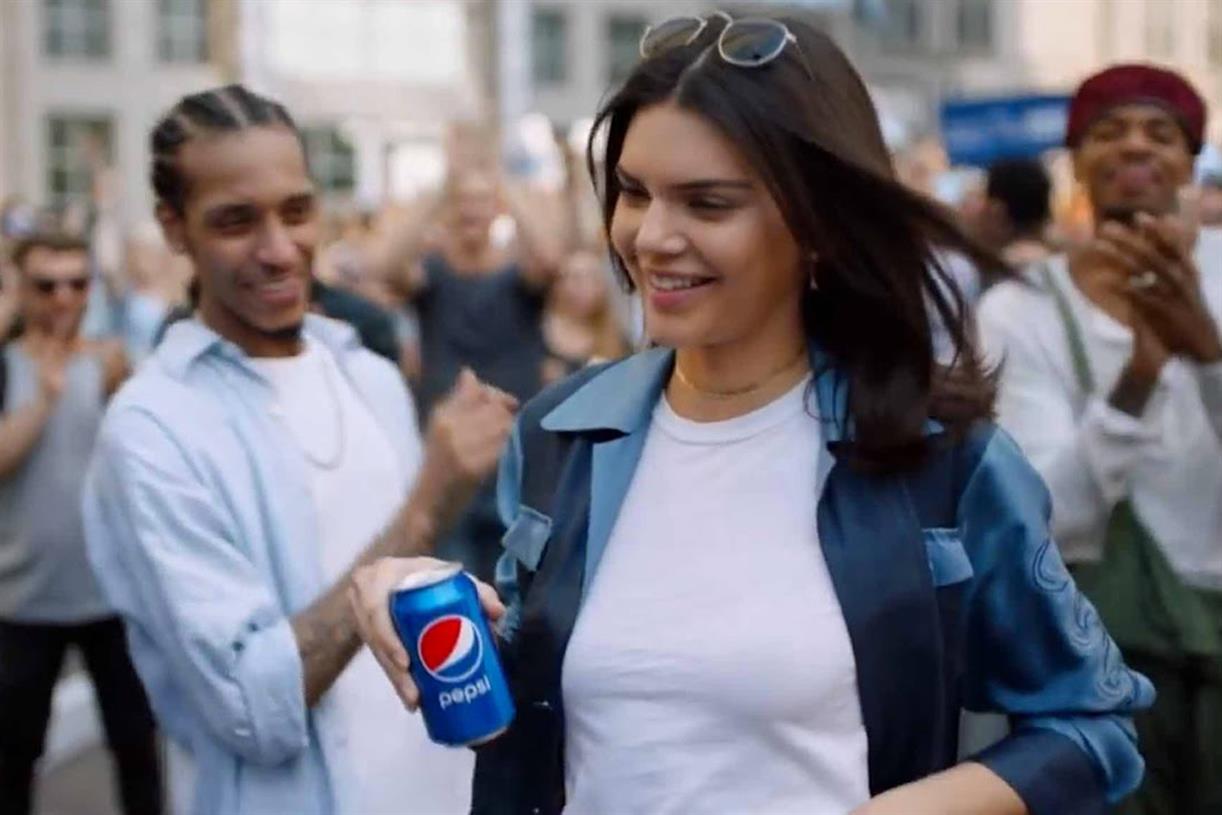
Image courtesy of Pepsi.
If I had a nickel for every time Pepsi was caught up in controversy…
I'd have two nickels. Which isn't a lot, but it's weird it happened twice, right?
Last weekend, I finally saw the new biopic about Michael Jackson, Michael . I was taking a break from writing my PR Case Studies final paper on the Pepsi Kendall Jenner campaign controversy. Imagine my surprise when, halfway through the film, yet another controversial Pepsi ad graced my eyes.
It got me thinking: how does a brand mess up this bad… multiple times… and still come out on top?
In 1984, Michael Jackson was filming an ad for Pepsi’s “New Generation” campaign when a set of fireworks went off too early and ignited his hair on fire. He suffered second- and third-degree burns to his scalp and face. Many of his fans blame this incident for being the kickstart to his painkiller addiction, which is what ultimately led to his untimely death in 2009.
And in 2017, Pepsi lands itself back in hot water with the “Jump In” campaign featuring Kendall Jenner. It depicts a protest in which Jenner saves the day by handing a cop a Pepsi as if a soda could solve decades of systemic issues. Mentions of Pepsi skyrocketed - by over 21,675% - but sentiment was reported at 58.6% negative.
Despite all this, PepsiCo remains the second-largest food and beverage company in the world. So… how?
A big part of Pepsi’s success is brand loyalty . Since its partnership with MJ in the 80s, Pepsi has consistently attached itself to pop culture, especially youth culture. Pepsi always focuses on the youth generation at that point in time, positioning itself as trendy, fresh, and fun. This strategy built long-lasting emotional connections that don’t disappear overnight, even when a campaign (or two) backfires.
Pepsi has also stayed relevant by using the competition. The Pepsi Challenge is an interactive campaign that engages consumers and challenges its biggest competitor, Coca-Cola, in blind taste tests across the nation. The numbers don’t lie - Pepsi won 100% of the 2025 challenge’s national tour stops and achieved a preference rate over 60%. It turned choosing a soda into a mini competition -- and people love to feel like they’re in on something. Plus, it doesn’t hurt that Pepsi can now say, statistically speaking, its product is better than Coke.
Pepsi’s competitive marketing isn’t safe either -- it's cheeky and risky in all the right ways. From the 2001 “Vending Machine” (a Coca-Cola-esque polar bear chooses Pepsi over Coke in a blind taste test), Pepsi leans into humor and rivalry. The competition will never cease to exist -- it's how Pepsi uses it to promote its own product in a fun, light-hearted tone that makes it so successful.
Pepsi’s popularity isn’t from avoiding mistakes; it's from outlasting them. Through decades of staying culturally relevant and being extremely strategic in marketing, Pepsi has built a legacy bigger than any single campaign or controversy. Not every risk lands, but the brand’s willingness to push boundaries keeps it interesting. At a certain point, the controversies have almost become background noise.

"The competition will never cease to exist -- it's how Pepsi uses it to promote its own product in a fun, light-hearted tone that makes it so successful."
- Susanna Mann, Shimek's Gen Z Voice
Summer rerun
With award winning Award-Winning Business Strategist, Muna Ikedionwu.
Each month, Shimek's Sarah Daniels invites someone she thinks you should know into The Salon, a space to share ideas around vocation vs. corporate ladders, and individuals making a difference in the best way they can.
This summer, we are revisiting past guest interviews just in time to listen on vacation. In June, we’re revisiting our conversation with Muna Ikedionu.
Listen to the episode here.
Shimek is built on connection. We’ve counseled more than 1,700 companies on their agency search and marketing strategy at no cost to them.
Reach out anytime, we'd love to be a resource.
Did someone forward you this newsletter? Make sure you're on the list! Subscribe so you don't miss the next edition of Field Notes.
Subscribe
LinkedIn
Email
Substack