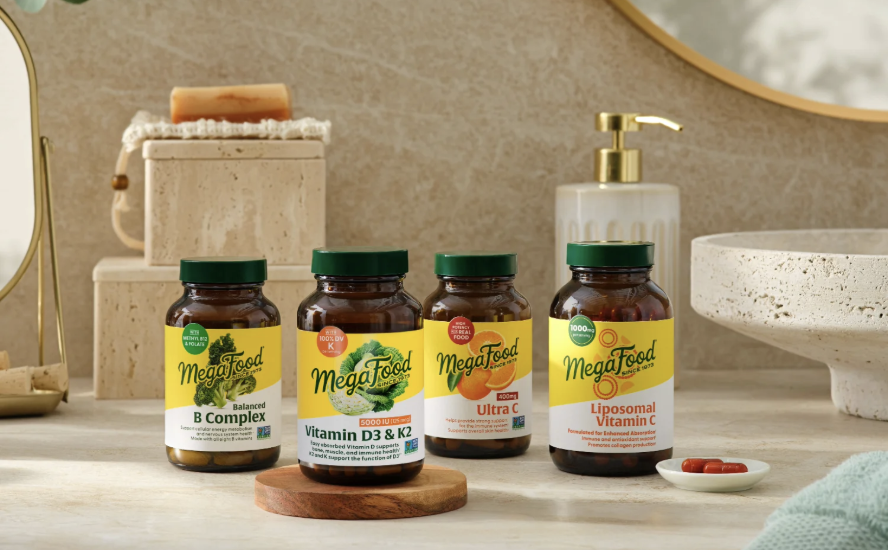
Image courtesy of MegaFood
MegaFood’s Reset —
New campaign, big box shelves.
MegaFood's new campaign is now live and products are available on shelves at Costco locations nationwide, marking a significant milestone for a team that put in the hard, unglamorous work long before ads began to run.
This launch was more than a campaign moment; it was a brand reset for MegaFood as a premium, science-backed brand in the crowded health and wellness space.
The team focused on getting the fundamentals right before scaling the visibility and demonstrated how a meticulous agency search can lead to real results. Makeovers are easy to announce, but rebuilding the foundation beneath them is the work that makes the difference.
After the dust settled, we asked Sarah what it felt like to see the work live at scale and what advice she has for brands navigating their own search and selection process.
1. Seeing the new ad campaign and the brand on shelves at Costco nationwide is a very real milestone—what did that moment feel like for you?
It was both deeply rewarding and grounding. Seeing the new work come to life—especially at a scale like Costco—felt like a clear signal that the hard work behind the scenes was translating into something real and tangible for consumers. Very proud of the entire cross functional team that captured this opportunity. As far as our new brand campaign, for MegaFood, this wasn’t just about a new campaign; it represented a reset and recommitment to who we are as a premium, high quality brand that believes in the power of food and science-backed formulas. It validated the strategic clarity, the creative ambition, and the cross-functional collaboration that went into rebuilding our foundation and reminded us that when you get the fundamentals right, the impact shows up where it matters most.
2. Your team was so organized when it came to the agency search—what advice do you have for other brands looking to hire an agency?
Start with clarity and a strong brief, not just on what you need produced, but on what problem you’re actually trying to solve. We invested time upfront aligning internally on our brand strategy, business objectives, and the role we wanted an agency to play. That made the search more focused and respectful of everyone’s time. My advice would be: treat the process like a two-way evaluation. Look beyond credentials and chemistry (don't get me wrong, chemistry needs to be there as table stakes), to assess how an agency thinks, how they challenge you, and whether they truly understand your category and consumer. The strongest partnerships come from shared ambition and mutual accountability, not just great decks.
The strongest partnerships come from shared ambition and mutual accountability, not just great decks.
-Sarah Lombard, CMO MegaFood
3. What was your primary goal for the agency you hired and how did the work expand or evolve?
Our primary goal was twofold: to find a partner who could bring strategic clarity to life through compelling, modern creative without losing the integrity of what MegaFood stands for and one who could help us modernize our media approach and performance marketing. From the start, the work with the agency we chose was built as a true partnership across both fronts, and they’ve been a great partner to date. As the relationship has evolved and our new media approach and campaign are now in market as of this month, we will become focused on continuously pressure-testing ideas, sharpening our voice, optimizing media in real time, and maintaining a strong performance mindset that drives results—while ensuring everything remains unmistakably MegaFood.
4. Now that the campaign is live, how does your relationship with the agency evolve to keep the momentum?
Once the work is in the market, the relationship actually becomes more dynamic. The focus shifts from launch to learning, what’s resonating, what’s converting, and where we can continue to sharpen the work. We stay closely connected through ongoing performance reviews and creative optimization but will also make space to think ahead. Keeping momentum means balancing rigor with creativity: using real-time insights to improve today’s work while continuing to build toward what’s next for the brand.
5. What do you think is the most important mindset, rule, etc. for a relationship with an agency that leads to success?
Treat your agency as a true extension of your team. That means being transparent about priorities and constraints, inviting healthy debate, and holding each other to a high standard. The most successful relationships are built on trust and shared ownership where both sides are invested not just in the work, but in the business outcome. When that mindset is in place, the partnership can weather change, push boundaries, and ultimately deliver work that moves the brand forward in meaningful ways.
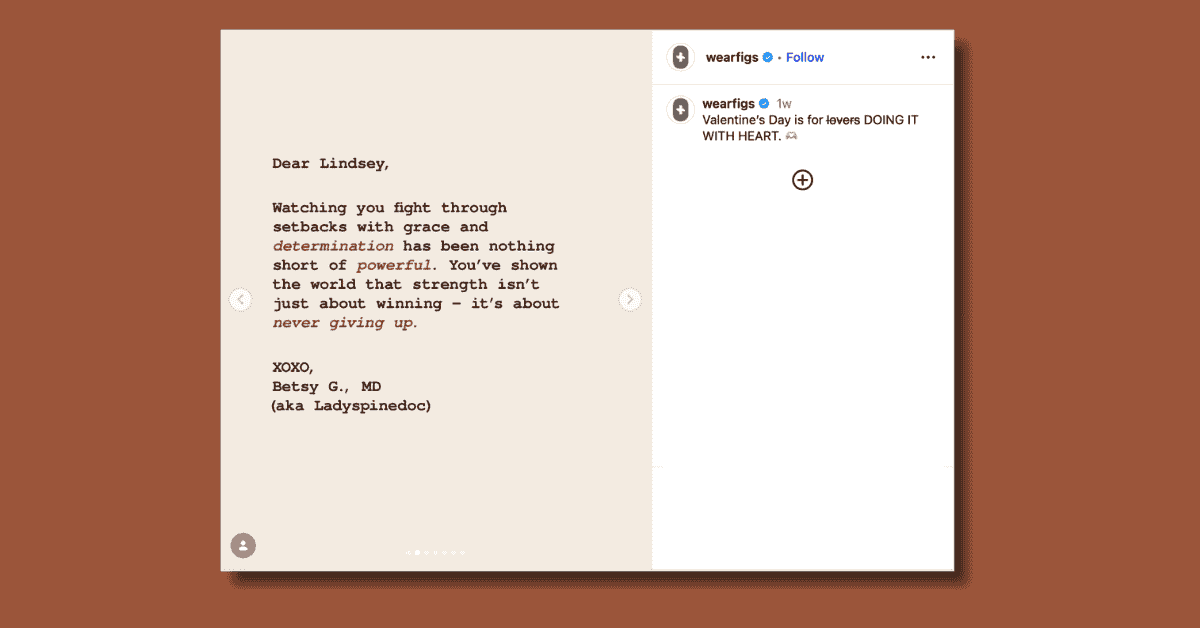
"Love note" to Lindsay Vonn after her tragic ski accident featured on Fig's Instagram.
When the comeback story turns into tragedy.
A real time lesson in crisis marketing
In a recent Marketing Brew piece on Figs’ Olympic campaign with Lindsey Vonn, crisis meets rapid response when the uplifting comeback story turns into a nightmare and forces a choice: scrap the work or re-work the story.
After Vonn crashed and was seriously injured, Figs didn’t pull the campaign—they reframed it to spotlight the real-life medical team who worked with her and the healthcare workers who show up when records, medals, and plans all go sideways. You can read the full story from Marketing Brew
here.

Undercover Marketing -
The behind the scenes efforts to score an Oscar Nomination
Behind all the glamor of the star-studded Oscars is a high-stakes marketing strategy aimed at a very specific audience: the 10,000 members of the Academy of Motion Picture Arts and Sciences. Studios market directly to voters through “For Your Consideration” efforts, which includes screenings, Q&As, billboards, and even sending free, high-quality physical copies to voters, called “screeners.” But the Academy has official promotional regulations. Campaigns cannot include gifts, excessive hospitality, and even how often direct communication can occur, which forces marketers to rely on storytelling and visibility.
FYC campaigns are essentially undercover marketing. Studios can invest millions of dollars on campaigning a single film. In 1998, Miramax reportedly spent over $15 million campaigning Shakespeare in Love, through heavy shmoozing with voters. The film infamously won Best Picture over Saving Private Ryan, and this upset win led to changes in campaigning policies. Now, campaigns have to be more creative, generating organic buzz by building momentum, utilizing social media, and using subliminal messaging toward voters. In 2017, Three Billboards Outside Ebbing, Missouri mimicked its own name by placing billboards all over Los Angeles, a key Academy member area. Netflix is rumored to have spent anywhere from $25 and $60 million marketing Roma, placing print ads in magazines like Variety or the Hollywood Reporter and sending merchandise to voters.
The question is… why? Why spend millions of dollars and more time than you actually spent making the film on campaigning? An Oscar nomination shows legitimacy to viewers, driving box office and streaming numbers, and growing the studio’s prestige. Award recognition can completely reposition a film.
Personally, I’ve been prepping for March 15 by watching all of the Best Picture nominations, some of which I never would have picked of my own volition. I’m realizing just how powerful that simple title of “Academy Award Nominee” is. And since that nomination, the task is convincing voters that the film is the best, most impactful, and most resonant of the bunch. That’s what makes Oscar's marketing so fascinating. Campaigns must feel organic while strategically keeping the film top of mind during the voting window. It’s not just about ticket sales -- Oscar's marketing is about influence, storytelling, and carefully managed exposure.

That’s what makes Oscar's public relations so fascinating. Campaigns must feel organic while strategically keeping the film top of mind during the voting window.
- Susanna Mann, Shimek's Gen Z Insider
Getting off the Ladder
Each month, Shimek's Sarah Daniels invites someone she thinks you should know into "The Salon", a space to share ideas around vocation vs. corporate ladders, and individuals making a difference in the best way they can. The February episode features Candace Maskell, Founder, Brand Strategy Consultant and Business Coach. She partners with founders and growing companies to shape their brand, visibility, and next phase of growth and in this episode we talk about what it feels like to reach the top of your career and realizing you need to be on a different climb.
Listen to the episode here.
Shimek is built on connection. We’ve counseled more than 1,700 companies on their agency search and marketing strategy at no cost to the them.
Reach out anytime, we'd love to be a resource.
Did someone forward you this newsletter? Make sure you're on the list! Subscribe so you don't miss the next edition of Field Notes.
Subscribe
LinkedIn
Email
Substack