Imaged provided by W Communications Global
LABUBU: Getting to Icon Status
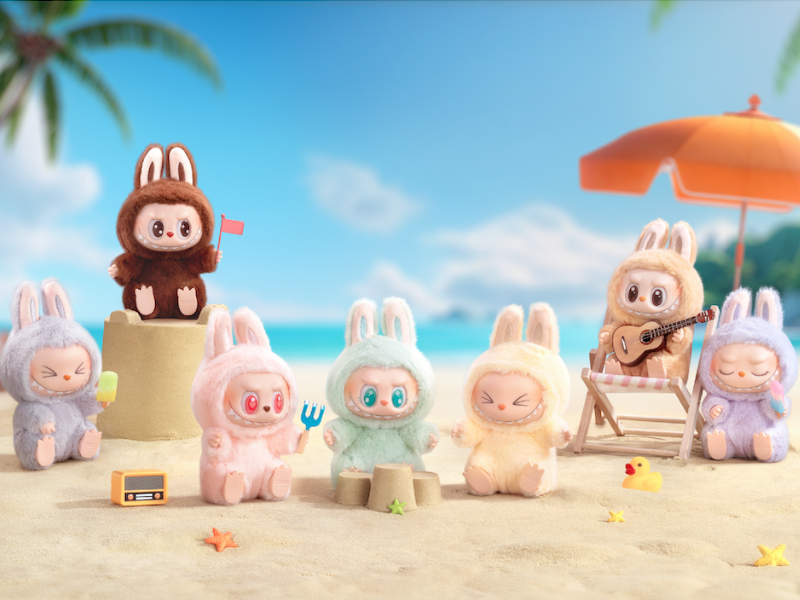
They're everywhere - on the hips of pop stars, the bags of influencers, even in this year's Macy's Thanksgiving Day Parade. These furry collectibles took over pop culture, and we have inside information from the team at W Communications on creating the LABUBU trend.
1. What was the process of creating the original influencer list, and how did that evolve as popularity grew?
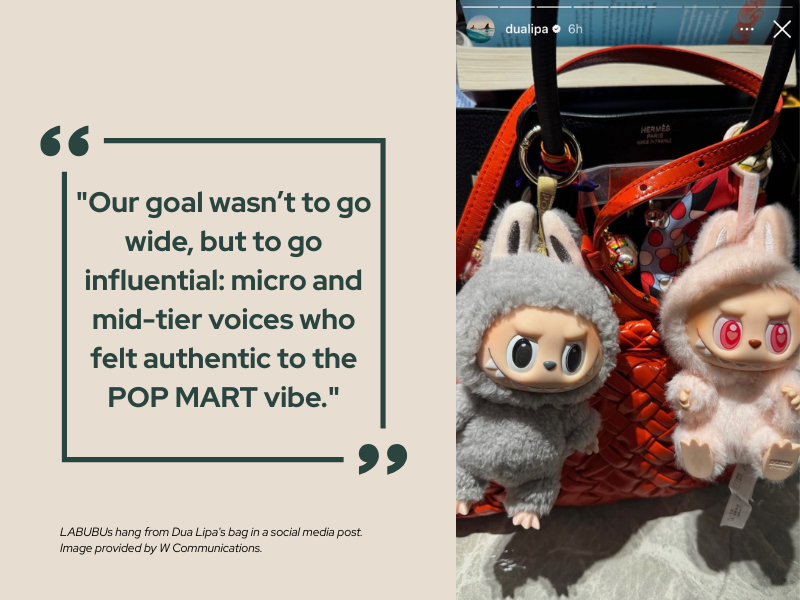
We started with a highly curated list that blended toy community tastemakers with fashion-forward creatives, people who naturally leaned into collectible culture, design, and streetwear aesthetics. Our goal wasn’t to go wide, but to go influential: micro and mid-tier voices who felt authentic to the POP MART vibe. As momentum grew, the list expanded to include fashion stylists, pop culture reporters, celebrity gift teams, and international names who had organically gravitated toward the character. By the time LABUBU landed in The Wall Street Journal and on Madonna, Dua Lipa, and Rihanna, our strategy had evolved to include more cultural storytellers and style icons in addition to traditional content creators.
2. Which platforms drove the earliest traction for Labubus, and why do you think those platforms worked best?
TikTok was the first major spark: the blind box unboxings, reveals, and haul videos took off quickly and drove a wave of fan-created content that felt spontaneous and deeply emotional. The platform’s discovery algorithm gave POP MART and LABUBU space to go viral beyond niche collectors, especially when fans shared restock alerts and reactions to sold-out moments.
3. How much of the social media engagement was kick-started by your team, and how much was user-generated/out of your control?
The initial spark came from intentional seeding as early as April of 2024 with the release of "THE MONSTERS Have A Seat Series". We strategically built excitement, targeting creators who knew how to inspire conversation. But the real magic happened when fans took over. Once the first wave of content hit, LABUBU started trending on her own: resale groups popped up, creators filmed spontaneous mall trips to find her, and restock alerts spread quickly. We couldn’t have scripted the community response if we tried. That kind of emotional connection was completely organic.
4. What was the first signal that Labubu had viral potential?
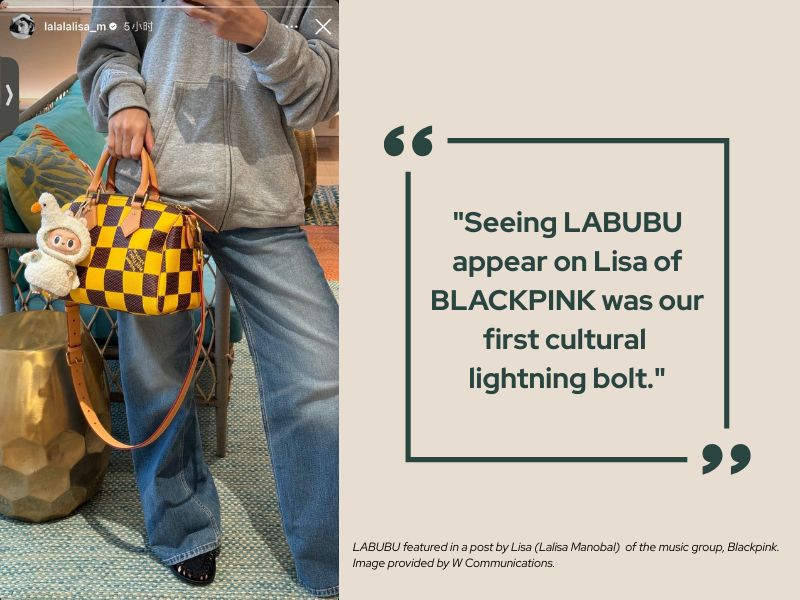
Seeing LABUBU appear on Lisa of BLACKPINK was our first cultural lightning bolt. It was a quick moment, but it spoke volumes. LABUBU was no longer just a toy; she was becoming a style symbol. That sighting, combined with a spike in secondary market pricing and an uptick in influencer DMs, was our cue that LABUBU had transcended niche fandom.
5. Did the brand blow up in a way you expected it to? Did you have to pivot the marketing strategy based on engagement?
We knew LABUBU had the potential to be big — but the speed and emotional depth of fan response definitely exceeded our expectations. Our strategy quickly shifted from simply introducing her to sustaining the cultural momentum. That meant more PR storytelling, more restock timing updates, more rapid-response creator outreach, and a greater emphasis on fashion and streetwear tie-ins. We moved from awareness to world-building, and the community was eager to follow.
6. Can you give us any hints as to what is next for the brand?
LABUBU has officially hit icon status, and we’re just getting started. Look out for her in the Macy’s Thanksgiving Day Parade this year, a huge moment for POP MART’s presence in the U.S.. There is also a mysterious new pop-up experience featuring SKULLPANDA - another top-selling IP within NYC that goes far beyond the typical pop-up. As POP MART expands across North America and beyond, LABUBU will continue showing up in unexpected ways — across art, fashion, retail, and culture.
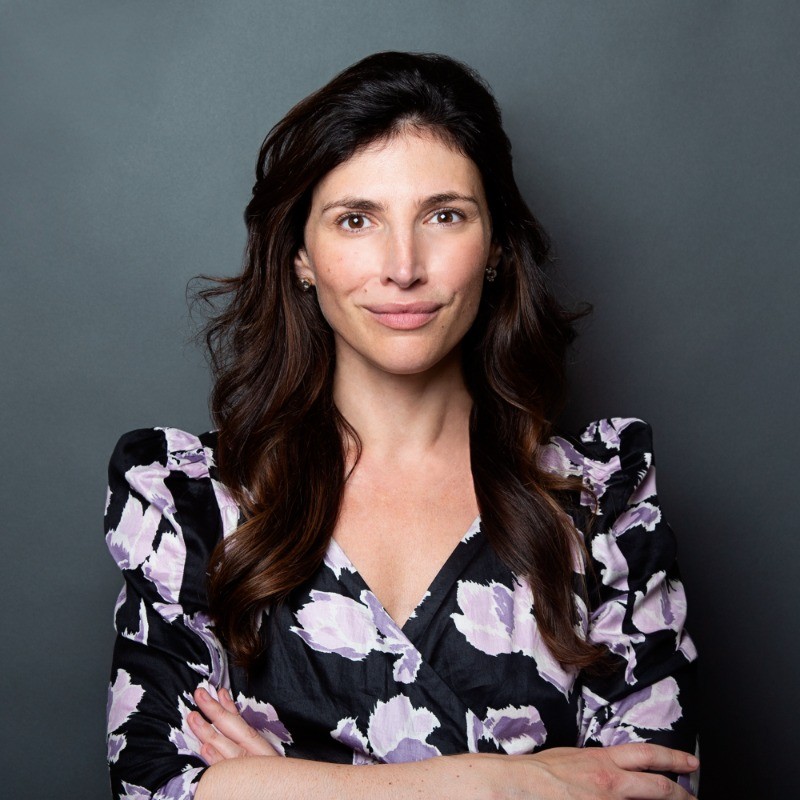
Janna Turner, CEO of Antenna Up
The Boys Are Not Ok: A Conversation with CEO of Antenna Up, Janna Turner.
Janna Turner is a strategist with over two decades of experience building values-aligned networks across the public, private, and social sectors. She founded the award-winning consultancy Style House at 23 and has since become a trusted voice to leadership teams with clients ranging from Estee Lauder to the WNBA. Today, she serves as the CEO of Antenna Up and the President of Synastry Capital.
1. Why focus on men, especially in today’s culture? What gaps made you want to build Antenna Up — and what do marketers need to understand about that audience right now?
Boys and men are facing record levels of loneliness, mental health challenges, and confusion about their roles in a fast-changing world. When men struggle, everyone around them does too. In 2025, many feel both blamed and directionless — but for communicators and marketers, that’s also an opening. We can meet men where they are and connect more meaningfully than ever before. My first company, Style House, was ahead of its time in 2006 for helping brands market authentically to women and girls — and I know the same kind of transformation is possible today with men and boys.
2. You’ve called Buoys Club a space for “uplifters” — people working toward a healthier future for boys and men. Why should brand leaders take that mindset, too?
Because Buoys save lives. Taking an “uplifter” mindset isn’t just good ethics — it’s smart business. Men are not a monolith. They’re looking for brands that respect them, inspire them, and help them grow. When companies show up that way, they earn deep and lasting loyalty. Men and boys are craving meaning, humor, community, and representation that feels real — so they can show up better as partners, parents, teammates, and leaders. That ripple effect benefits everyone.
3. What are some ways that Antenna Up is moving the needle on men’s health and wellness?
Antenna Up brings compassion, curiosity, and strategy into how we engage men — as humans, not stereotypes. Our Marketing to Men Summit convenes decision-makers from sports, health, media, and consumer brands to align on uplifting the wellbeing of men and boys through storytelling and strategy. Through our clubs like Buoys Club and Carried Interest Club, and our working groups such as the Healthier Men Collective and Men’s Media Collective, we’re turning talk into infrastructure — enabling “competitors” to collaborate around what’s ultimately a shared mission: the survival and thriving of the human race.
4. You help leaders align how they show up with what they stand for. When messaging feels off, what’s usually the real issue — and how do you fix it?
When messaging feels off, fear is almost always the culprit. Bold ideas get watered down to please everyone, and precision gets lost. The truth is, everything you do or say today will be “problematic” to someone, somewhere — but that can’t stop progress. After two decades of working with powerful and influential people, I’ve learned that 100% of us underestimate our power. The right nudge from the right person at the right time can change the world. When we center shared values, we create trust, confidence, and collective action.
5. What do you wish marketers did differently when it comes to men?
Men want power, pleasure, and laughter, yes — but they also want to be seen, respected, and inspired for all of who they are. Too often, marketing still assumes men only respond to toughness, potty humor, or status. It’s time to speak to men’s full humanity — their needs, emotions, and desire for safety, belonging, and purpose. Focus on moments of connection: being a good dad, taking care of your body, supporting your friends, finding meaning in your work. The brands that get this right will shape the next decade of culture.
6. How can individuals get involved with Antenna Up? Antenna Up is holding a summit on February 4, 2026 in New York City called Healthier Men at Work, bringing together C-suite, HR, and talent leaders with practitioners and changemakers to explore men at work as multi-dimensional human beings — and opportunities to strengthen business, culture, and wellbeing all at once.
We’re building on the momentum of our recent
Marketing to Men Summit for brands and advertisers, where a Bloomberg reporter who was in the room at our summit turned out this piece last week:
An Unlikely Business Trend: Men’s Vulnerability Groups at Work.
If folks want to get involved before the summit, they can
join our open-to-all community, Buoys Club —a hopeful space for those who are uplifting the well-being of boys and men in their spheres of influence. The next meeting with be on January 8. More information about the Buoy's Club meeting can be found here: https://luma.com/52geyrh4
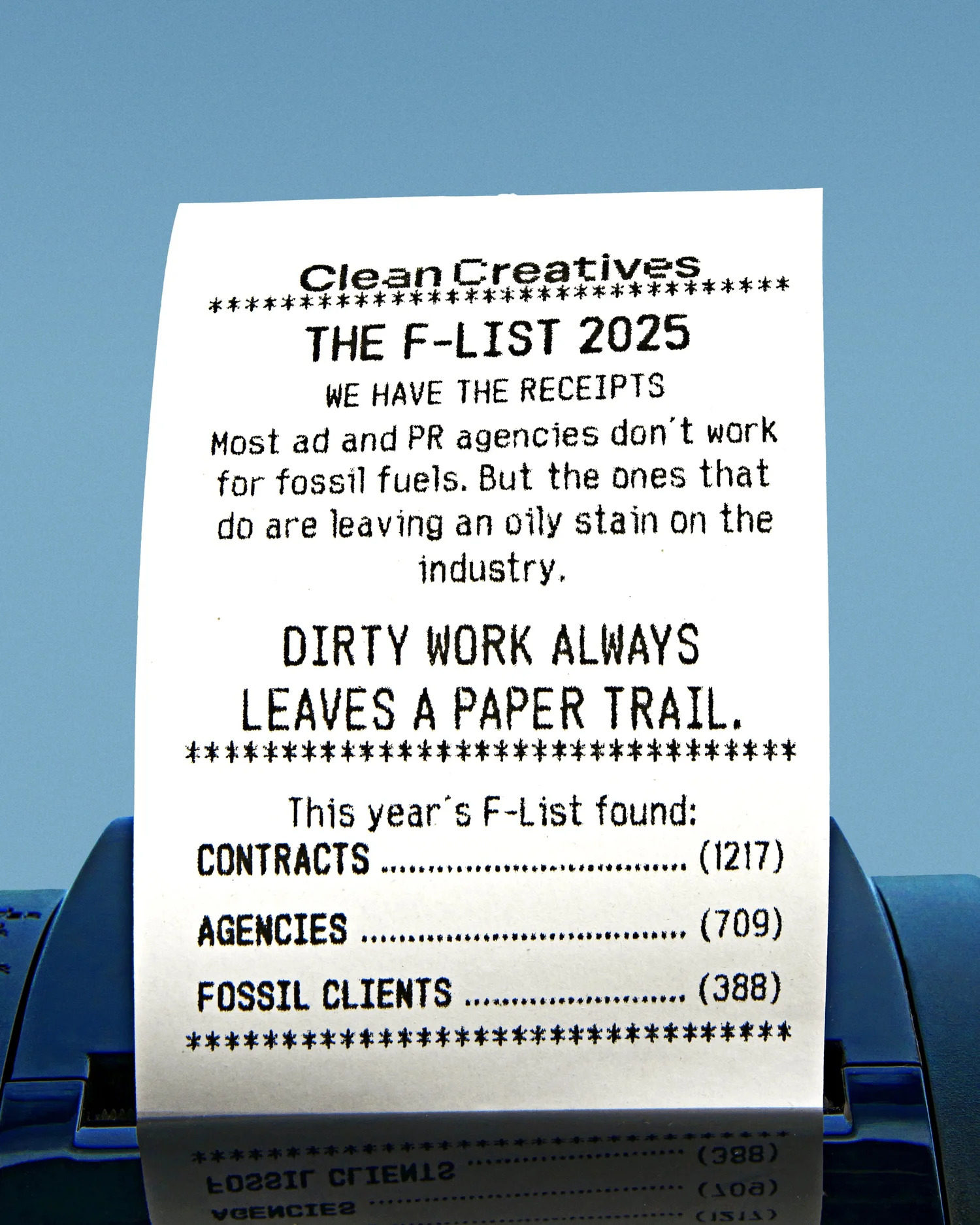
Image sourced from Clean Creatives
The F-List is here.
While the rest of the world is switching to clean energy, some people in our industry are stuck in the past. Our partner Clean Creatives created the F-List: the largest public database that reveals which advertising and PR agencies are working with fossil fuel clients. There are 1,217 fossil fuel contracts, 709 AD/PR agencies, and 388 clients, to be specific.
"Why we publish the F-List... It has led to transparency and accountability in the industry, with four Havas agencies being stripped of their B Corp certification in 2024 after Havas won Shell's global media contract. The F-List is currently in its 5th year of publication and we have found more contracts than ever." - Clean Creatives.
While these numbers might seem bleak, there's some light. Currently, there are over 1,500 agencies that have signed Clean Creative's pledge to decline work with fossil fuel clients. See the list here.
Why Not? Questioning the Traditional Climb...
Each month, Shimek's Sarah Daniels invites someone she thinks you should know into "The Salon", a space to share ideas around vocation vs. corporate ladders with individuals making a difference in the best way they can. The October episode features Muna Ikendionwu, the Founder and President of business strategy firm M.KEDI. Listen here.
Shimek is built on connection. We’ve counseled more than 1,700 companies on their agency search and marketing strategy at no cost to the them.
Reach out anytime, we'd love to be a resource.
Did someone forward you this newsletter? Make sure you're on the list! Subscribe so you don't miss the next edition of Field Notes.
Subscribe
LinkedIn
Email
Substack